
Supplier competition
We organize competitive offers from licensed suppliers based on your market, usage, and contract window.
Commercial energy strategy
Apex reviews your current supply contract, compares offers from 35+ licensed suppliers, and presents the strongest options in plain English.
No obligation. No interruption to energy delivery.
We turn a complicated supply market into a clear commercial decision.
We organize competitive offers from licensed suppliers based on your market, usage, and contract window.
Rates, terms, fees, pass-throughs, and renewal provisions are compared side by side.
We help your team act before expiration pressure reduces its options and negotiating leverage.
Competitive markets
Market structure, supplier eligibility, utility territory, and available products vary by state. Apex verifies the account before requesting offers.
Explore every market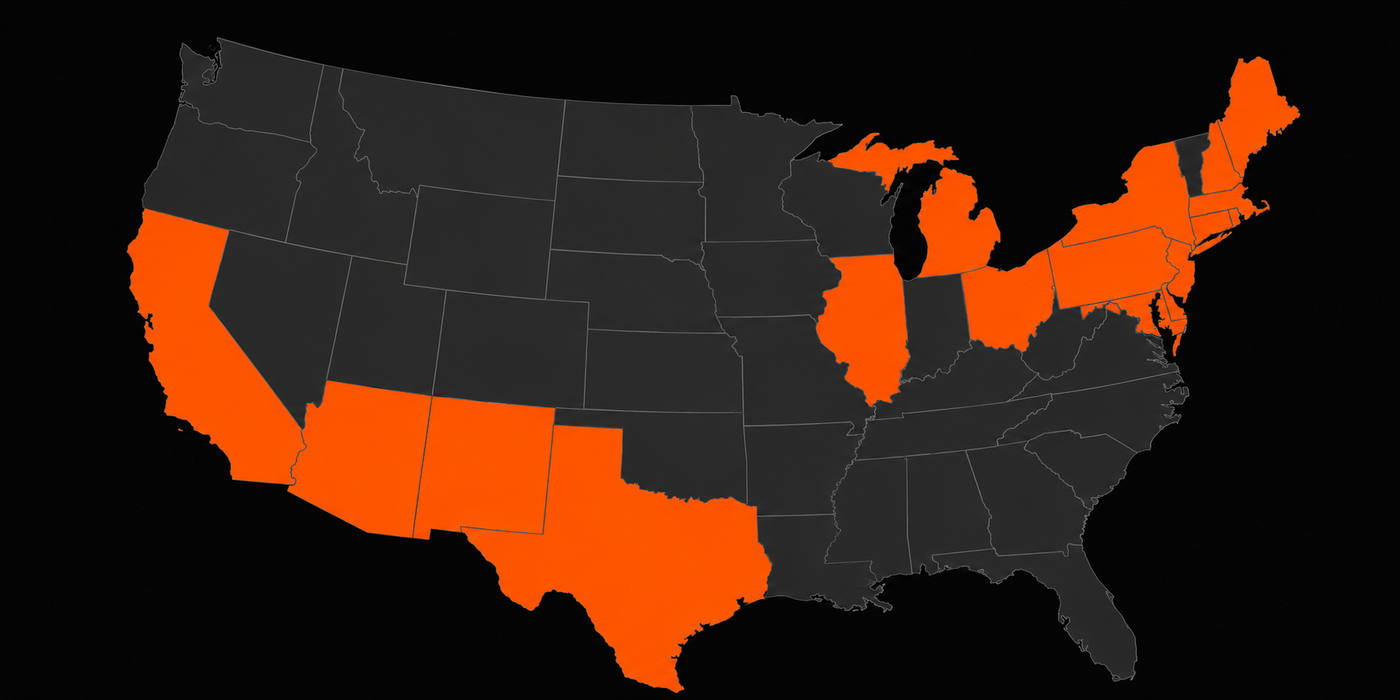
Clear comparisons
Headline price is only one part of a commercial energy contract. We organize the details that determine actual value.
Actual offers depend on usage, market, eligibility, and supplier approval.
Executive answer
Apex Energy Solutions helps eligible commercial customers make disciplined electricity and natural gas supply decisions. We organize account data, confirm the applicable market and service territory, compare qualified supplier structures, review contract economics beyond the headline rate, and keep the next renewal visible. The result is a documented decision process designed for finance, operations, procurement, and ownership teams.
Account eligibility and supplier availability are verified by service territory.
Commercial electricity and natural gas require separate market and contract analysis.
Every offer is normalized around price components, term, provisions, and operational fit.
A market review can confirm that the current position is preferable.
Enterprise procurement discipline
Energy procurement affects more than a single line item. Contract term, renewal language, pass-through treatment, usage tolerance, credit requirements, and site coverage can influence budgets and operating flexibility long after a quote is signed. Apex builds the decision from the controlling documents and actual account profile so the comparison can withstand internal review.
A strong process starts before bids arrive. The team identifies every account, meter, supplier, contract end date, notice requirement, service territory, and internal approval owner. That foundation makes it possible to compare equivalent offers, document assumptions, and avoid a fragmented portfolio in which each location renews under different standards.
Beyond the headline rate
A commercial supply offer must be read as a package. Apex separates fixed and variable components, recurring and one-time fees, potential pass-throughs, volume or swing provisions, automatic-renewal language, termination rights, and any account-specific conditions. The objective is an apples-to-apples view—not a stack of supplier PDFs with incompatible assumptions.
The recommendation also reflects the customer’s operating priorities. A finance team may value budget certainty; an expanding operator may need volume flexibility; a property portfolio may prioritize synchronized expirations; and a sustainability team may require documented renewable attributes. A better-fit structure is the one that supports the organization’s stated risk, budget, and governance requirements.
Portfolio visibility
Multi-site organizations often inherit accounts through growth, leases, acquisitions, and decentralized operating practices. Without a unified inventory, duplicate meters, missing contracts, default service, and misaligned renewals can remain invisible until a deadline or invoice forces action. Apex creates a portfolio view that shows where each account stands and what decision is next.
The same discipline supports a single large facility. Usage history, peak demand, operating schedule, planned equipment, occupancy changes, and production expectations provide context a headline annual total cannot. When the business changes, the procurement assumptions should change with it rather than repeating last cycle’s contract by default.
From information to action
Public rates, regulatory filings, market-operator data, and government statistics can establish useful context. They are not binding supplier offers. Customer class, service territory, load shape, start date, credit, term, and prevailing market conditions can materially change what is available to a specific business at a specific moment.
Apex’s market pages distinguish public benchmarks from account-specific pricing, show source dates, and link to authoritative references. When a business is ready to transact, the rate audit moves from education to verified account data, supplier confirmation, and controlling contract language.
Executive checklist
Use these questions to align finance, procurement, operations, facilities, legal, and ownership before approval.
Do we have a complete list of accounts, meters, suppliers, and contract dates?
Are all compared rates built from the same usage, start date, term, and included components?
Which provisions can change cost or restrict operations after execution?
Who owns approval, notice, enrollment, invoice validation, and the next renewal?
What business change would invalidate the usage and budget assumptions?
Direct answers
No. In competitive markets, the local distribution company generally continues delivery, infrastructure maintenance, meter functions, and outage response. Apex advises on eligible competitive supply decisions.
Yes. The process can inventory accounts by state and service territory, separate electricity and natural gas requirements, align decision criteria, and create a centralized renewal calendar.
No. A disciplined review may show that the current contract, a renewal offer, or default service is preferable to the available alternatives. The objective is an informed decision, not a forced switch.
No. Public benchmarks are educational context. A commercial offer must be confirmed for the customer’s account, usage, service territory, term, start date, credit, and market conditions.
Source transparency
These government and regulatory resources establish market and energy-use context. They do not replace account-specific supplier pricing, the applicable tariff, or the controlling contract.
National overview of organized wholesale markets, regional transmission organizations, and independent system operators.
Open official source U.S. Energy Information AdministrationFederal reference for commercial, industrial, residential, transportation, and electric-power energy use.
Open official source U.S. Department of EnergyGovernment tools and datasets for building benchmarking, audits, and energy-performance analysis.
Open official source ENERGY STARPlain-language methodology for normalizing building energy use by floor area and time.
Open official sourceA disciplined path from bill review to an informed supplier decision.
We identify the utility, supplier, account class, usage, expiration, and contract details.
Eligible suppliers and structures are evaluated against your actual account profile.
You receive a clear comparison and decide whether any offer meets your objectives.
From the Apex blog
A step-by-step operating guide for turning bills, usage, supplier bids, and contract language into a documented energy decision.
Read the guideUnderstand what these contract labels actually mean, which costs may still move, and how to choose a structure that fits the business.
Read the guideA field guide to the line items that matter before an electricity rate audit, supplier comparison, or facility-performance review.
Read the guide